Introduction
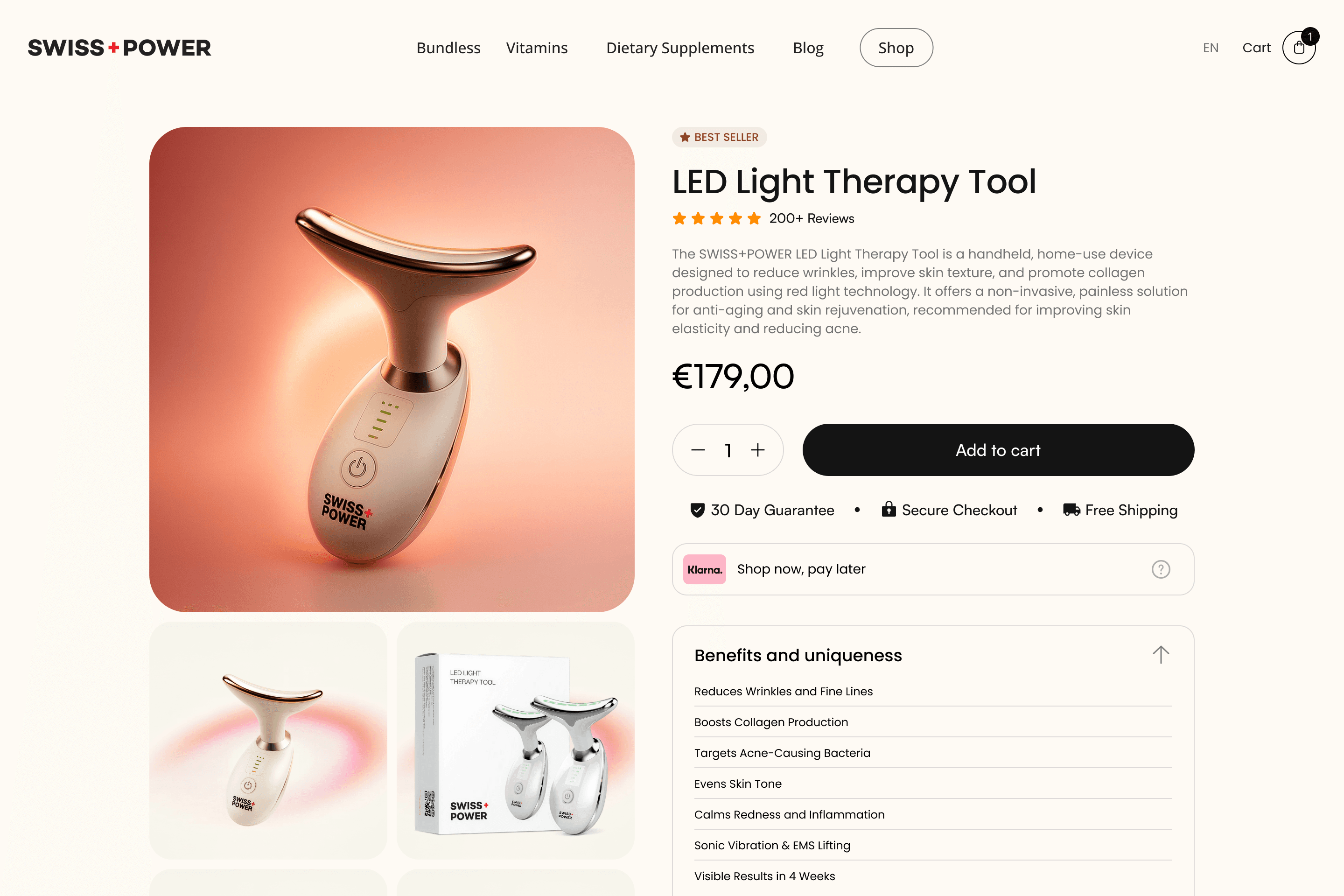
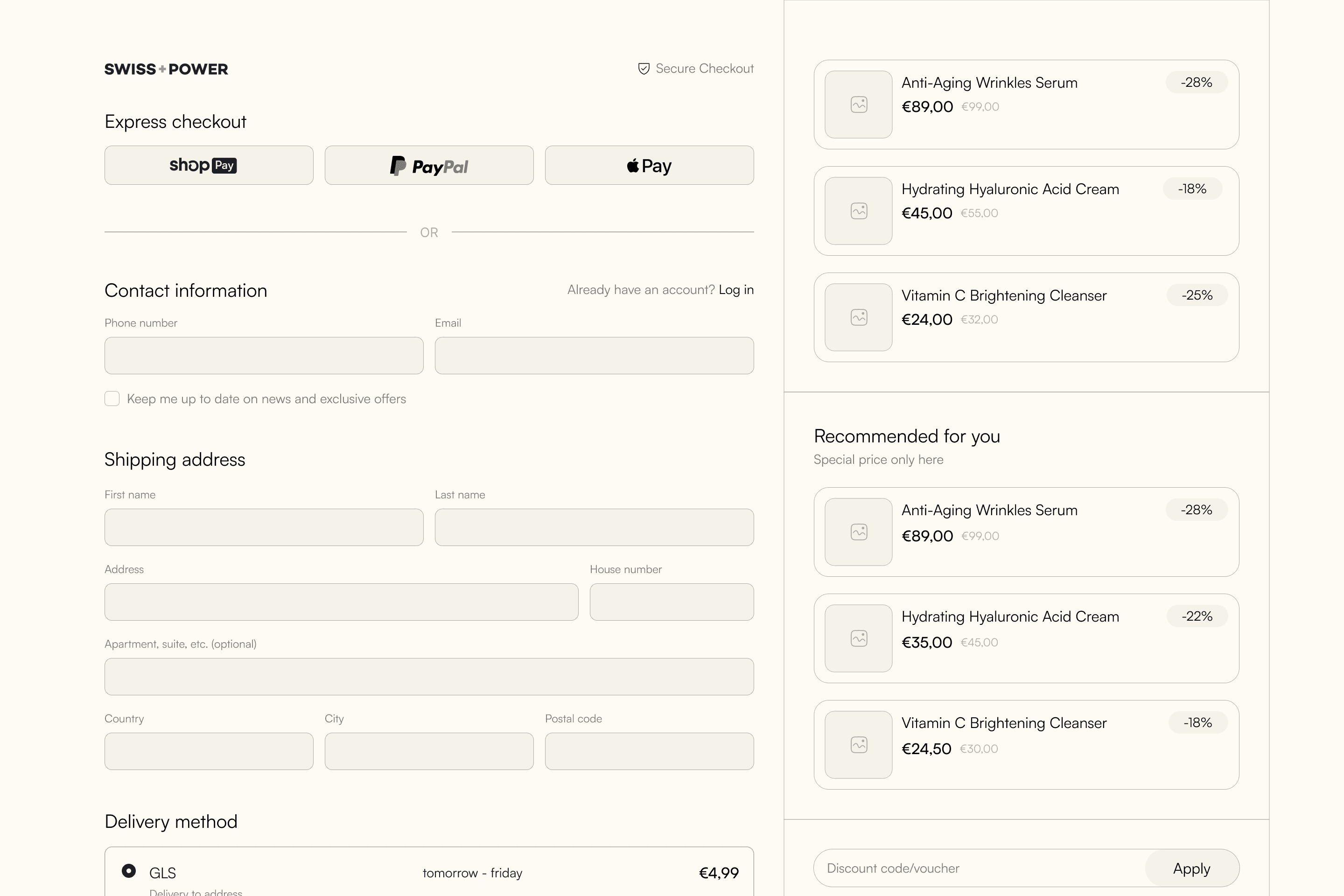
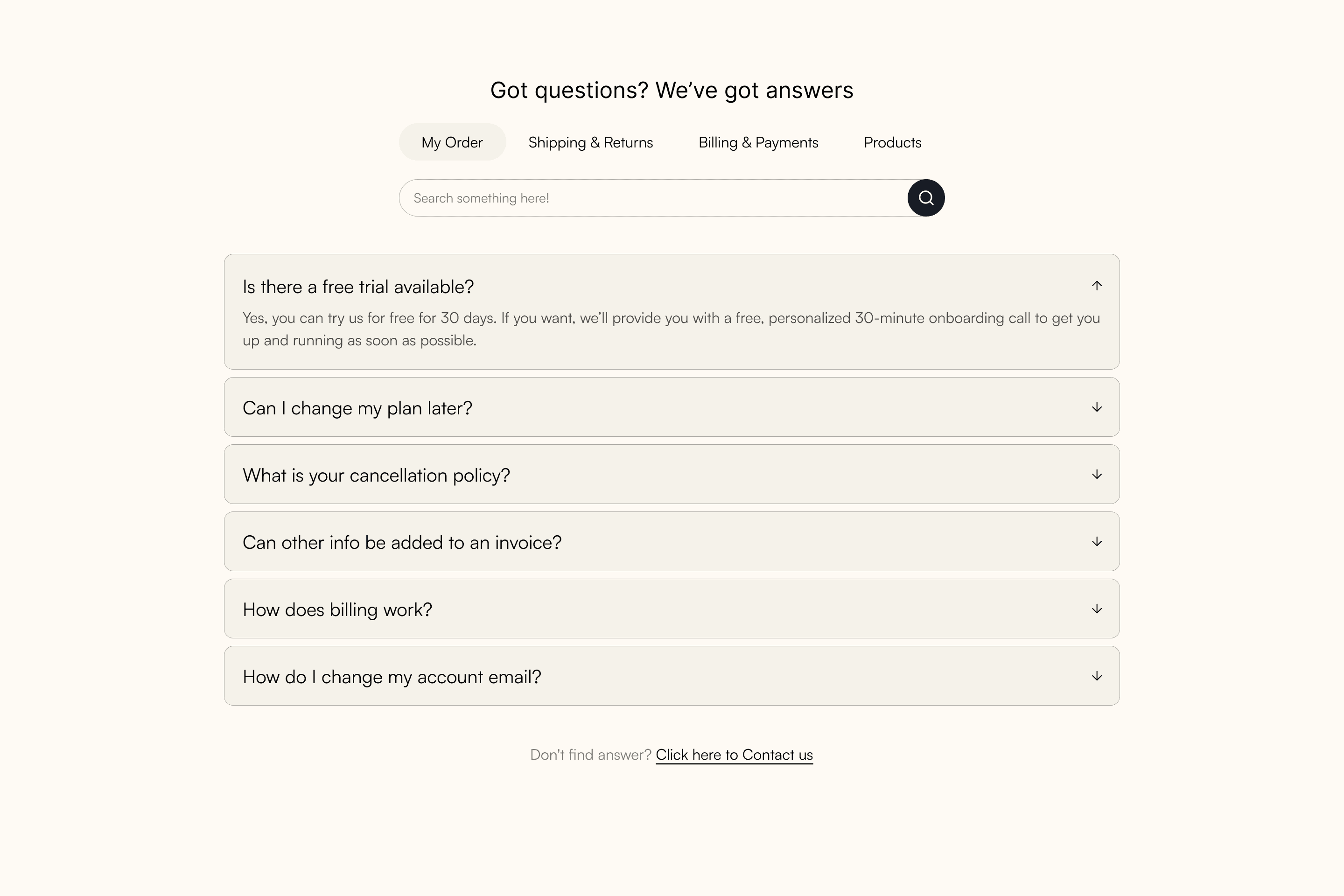
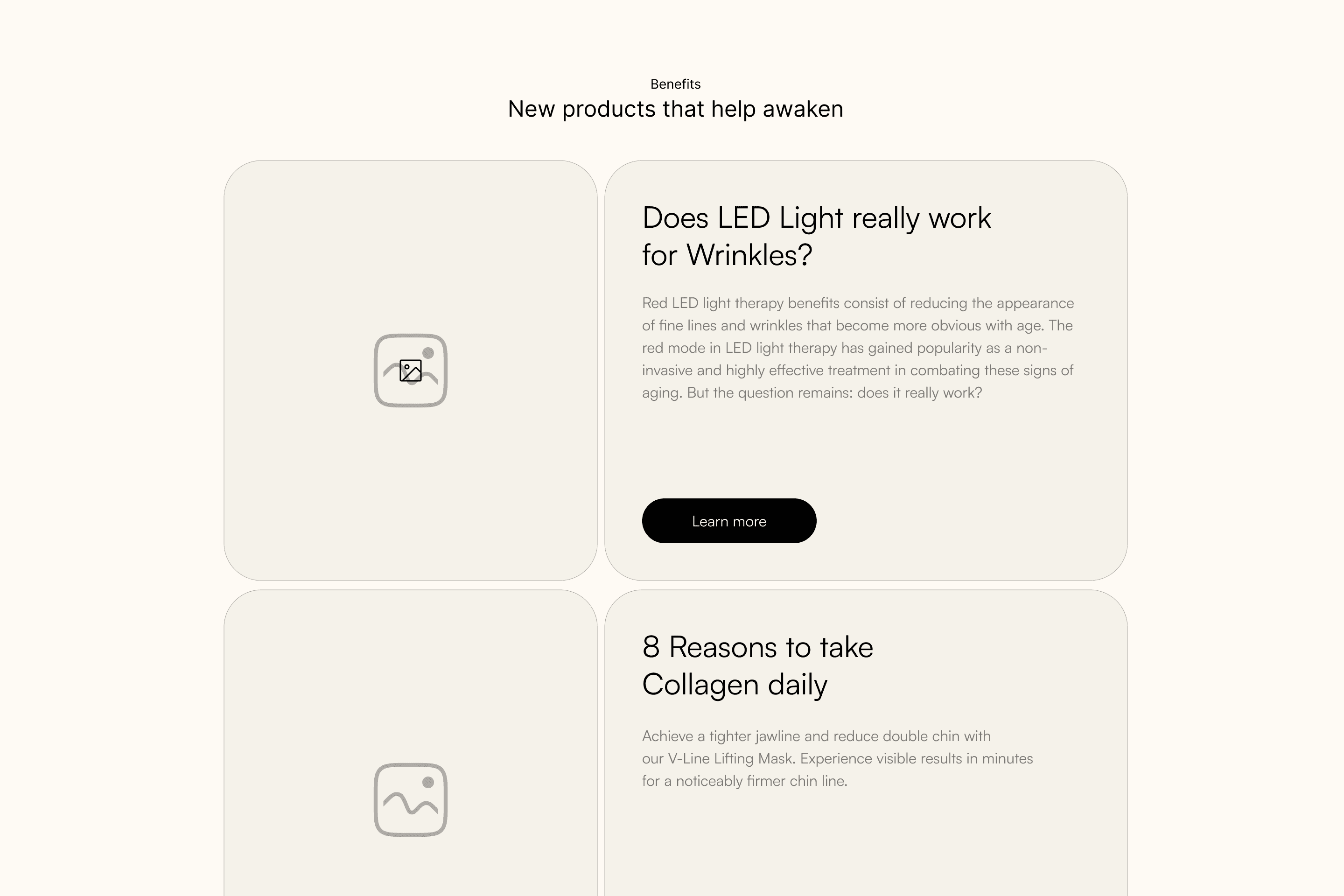
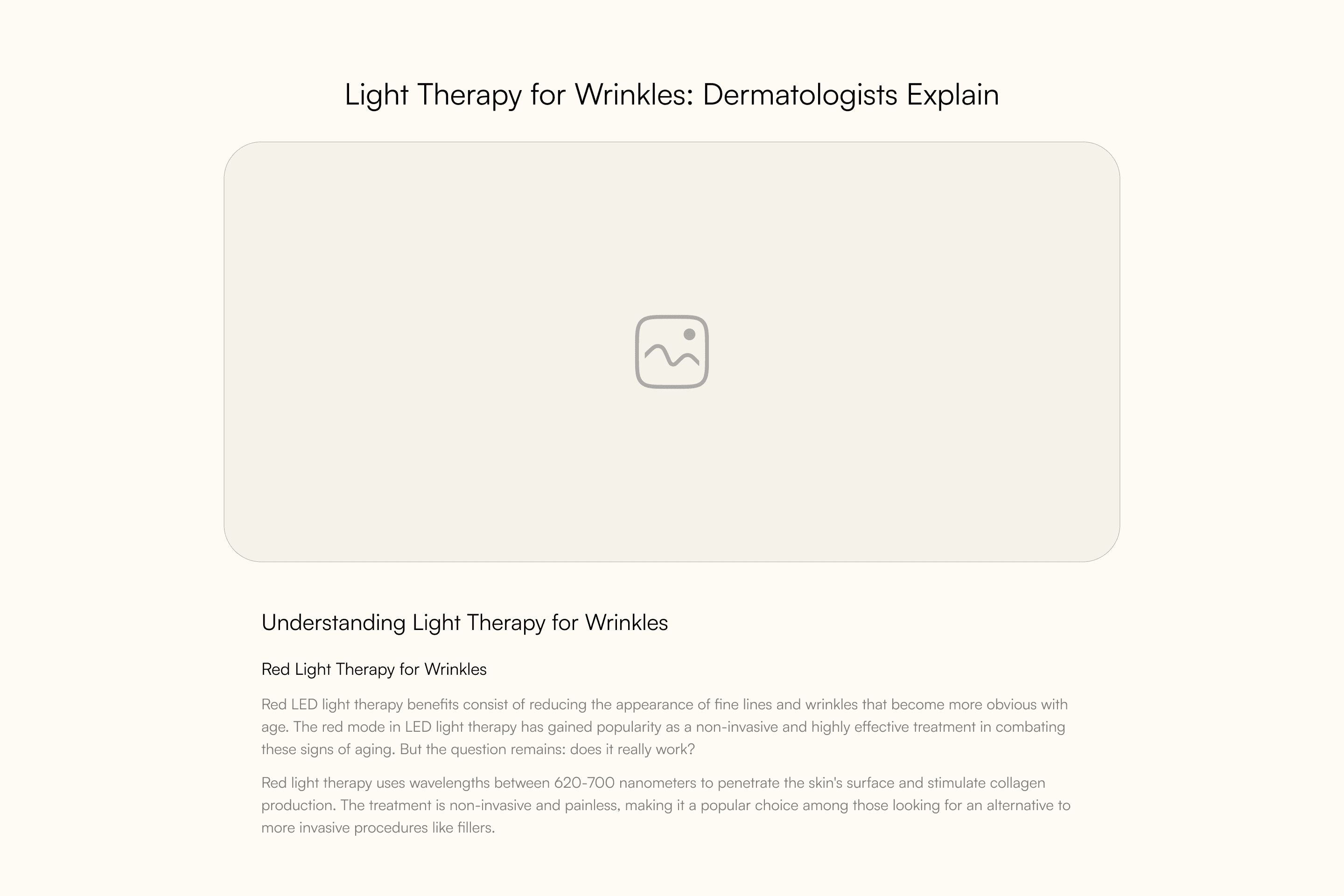
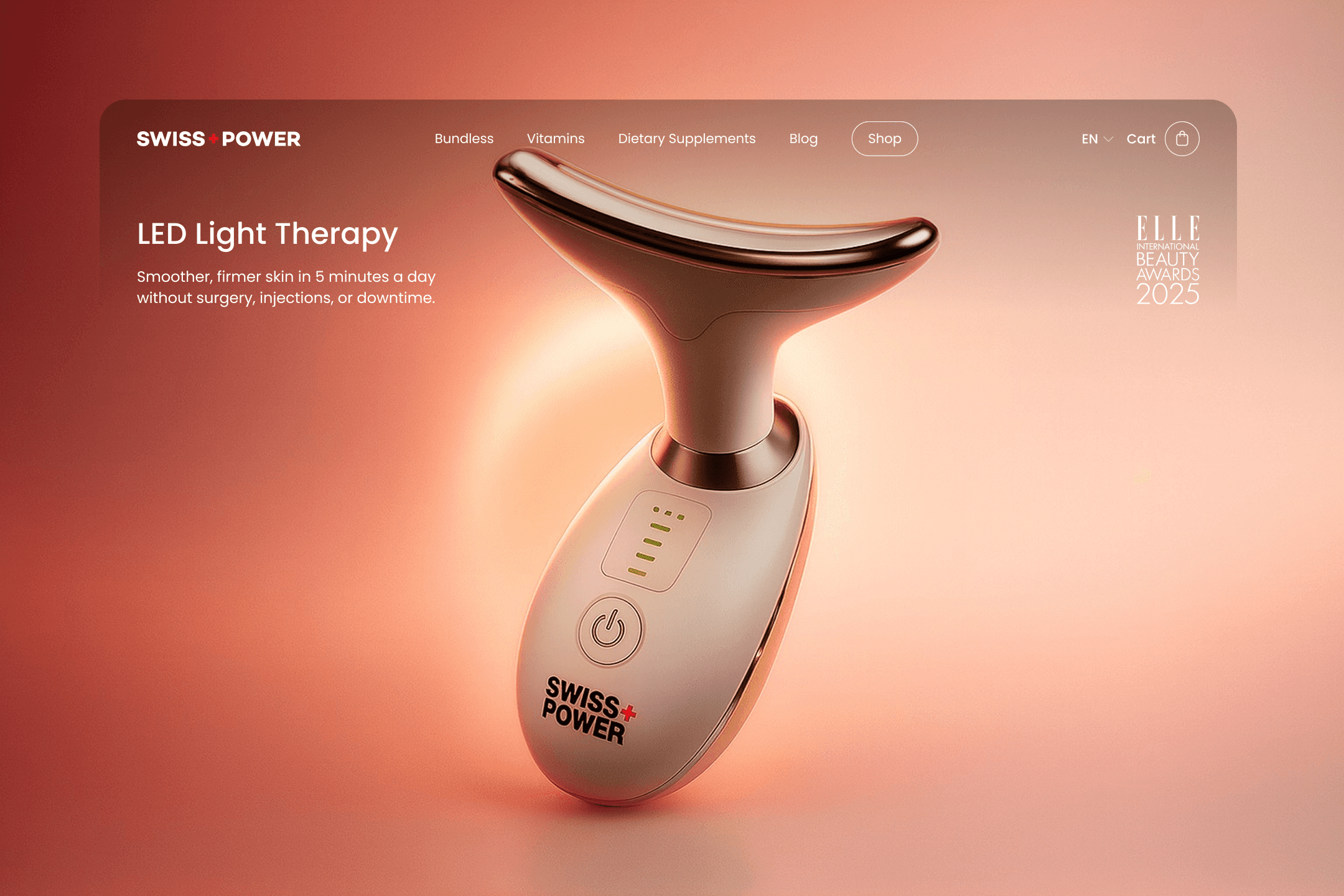
SWISS+POWER's LED therapy device sells at €179 — but the Shopify store read like a mass-market beauty brand. As sole designer, I diagnosed the gap as structural: trust signals buried in the footer, navigation built around generic labels, and a hero that led with messaging instead of product.
Role
Product & UI/UX Designer
Company
SWISS+POWER (Freelance)
Year
2025
Timeline
4 Weeks
Team
Sole Designer · Client collaboration
Categories
Beauty Tech
E-commerce
Scope & outcomes
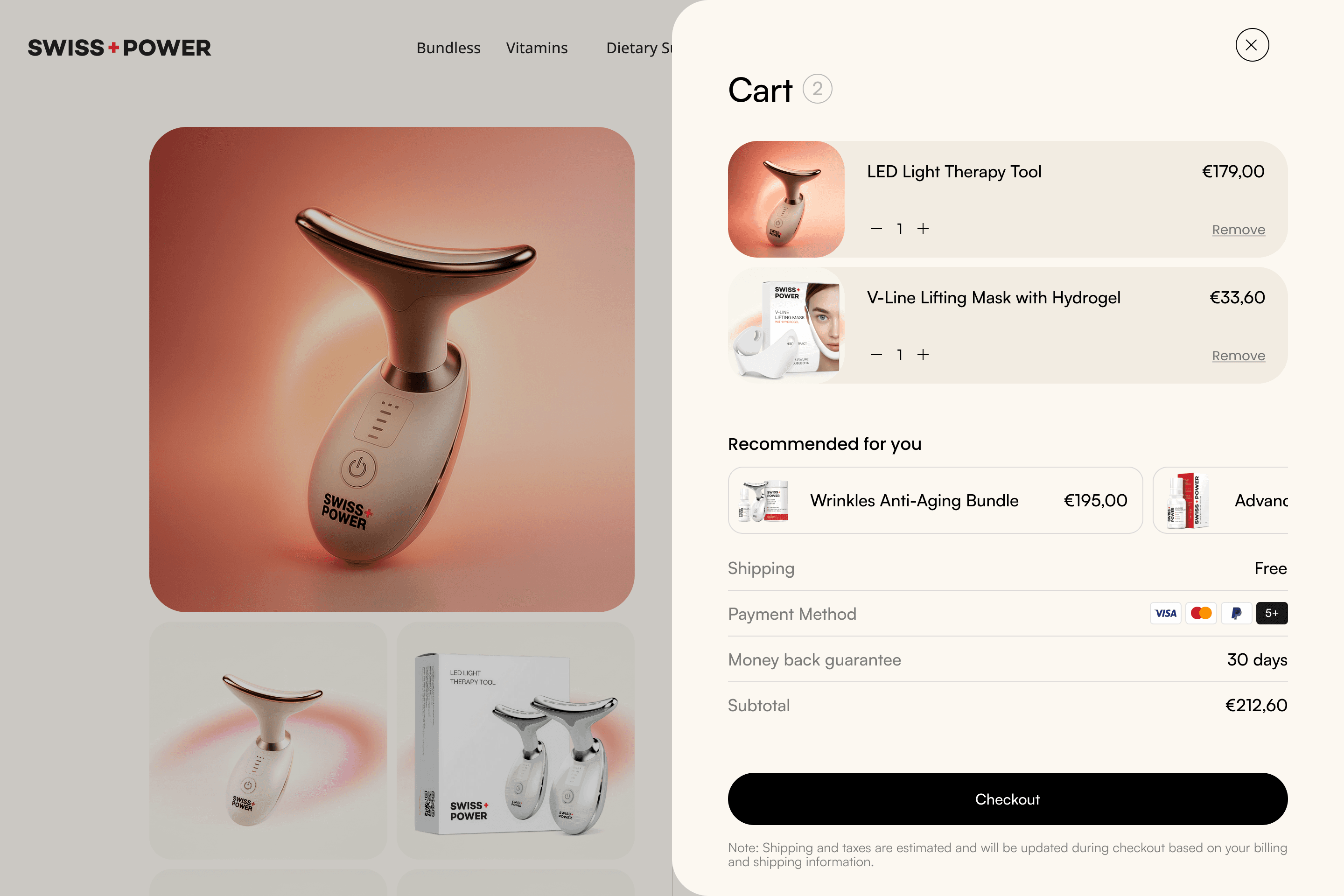
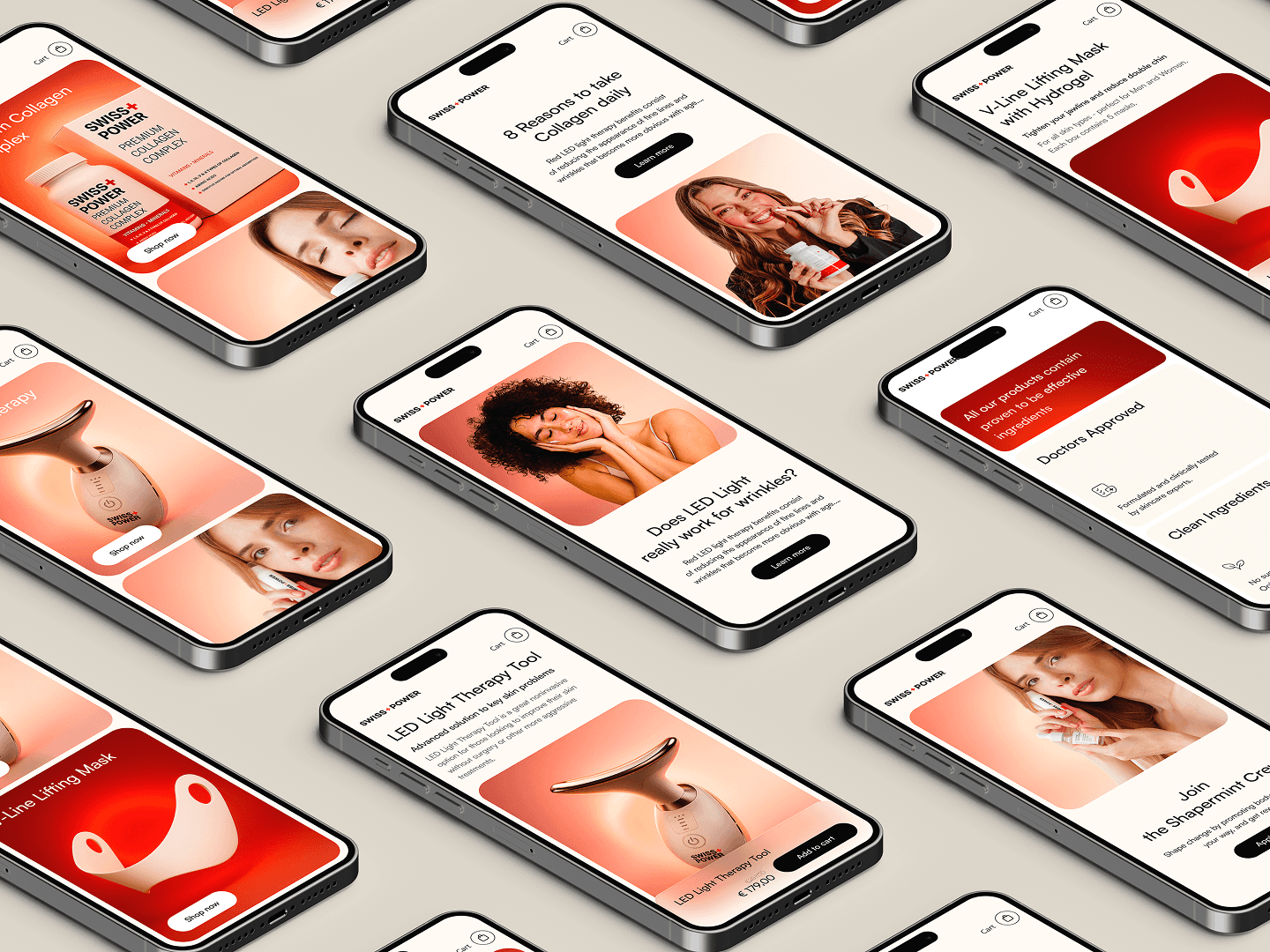
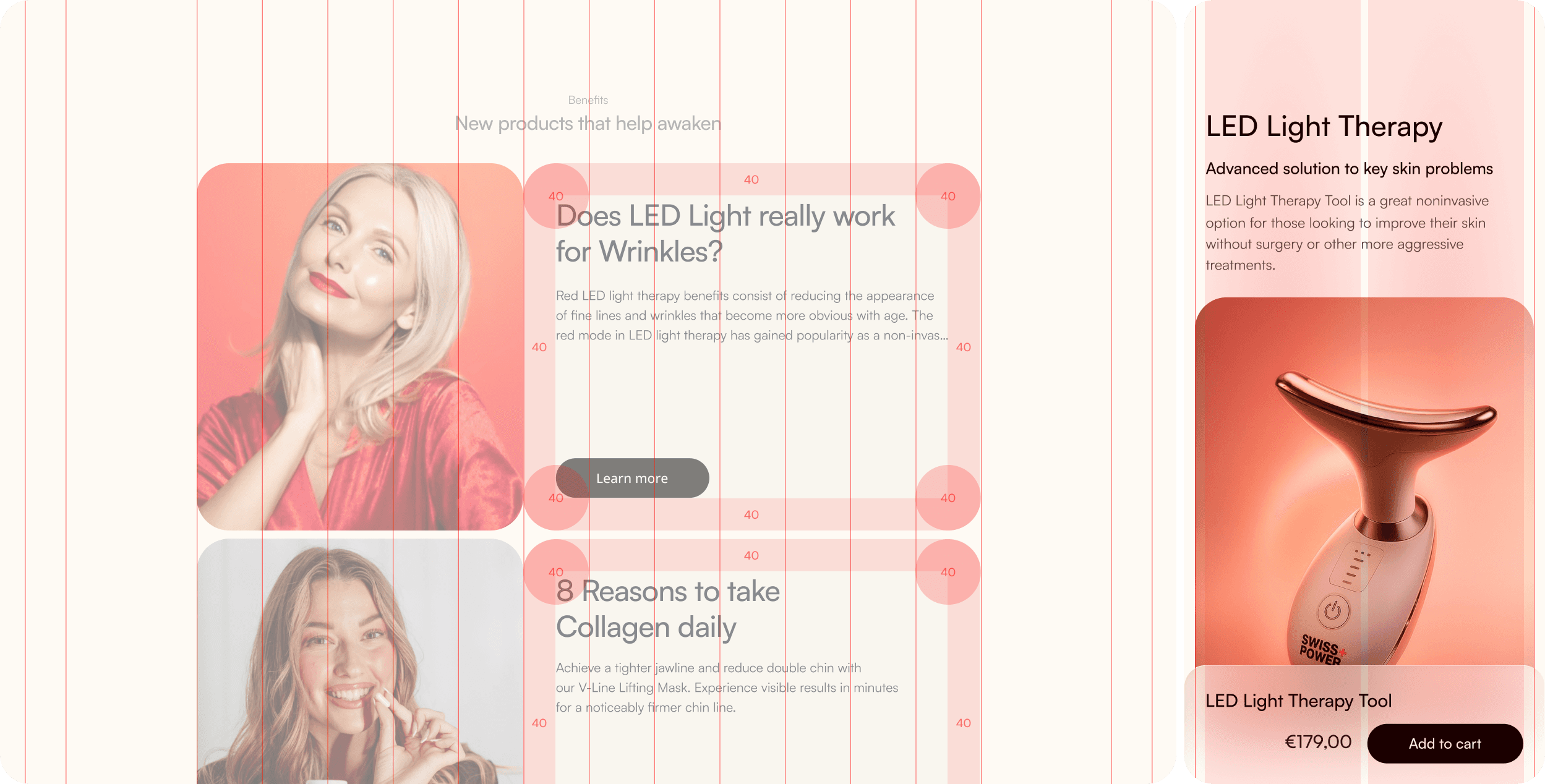
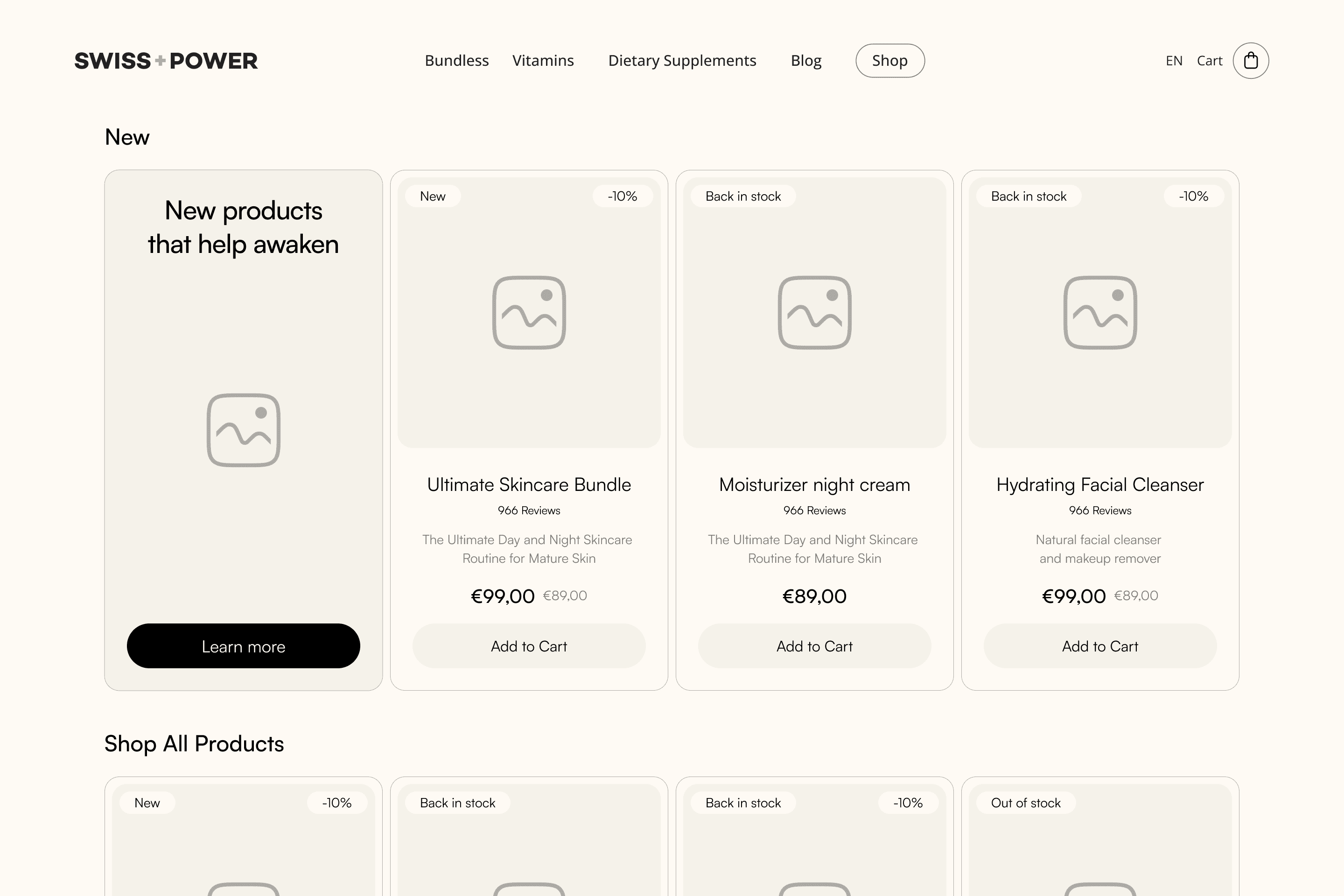
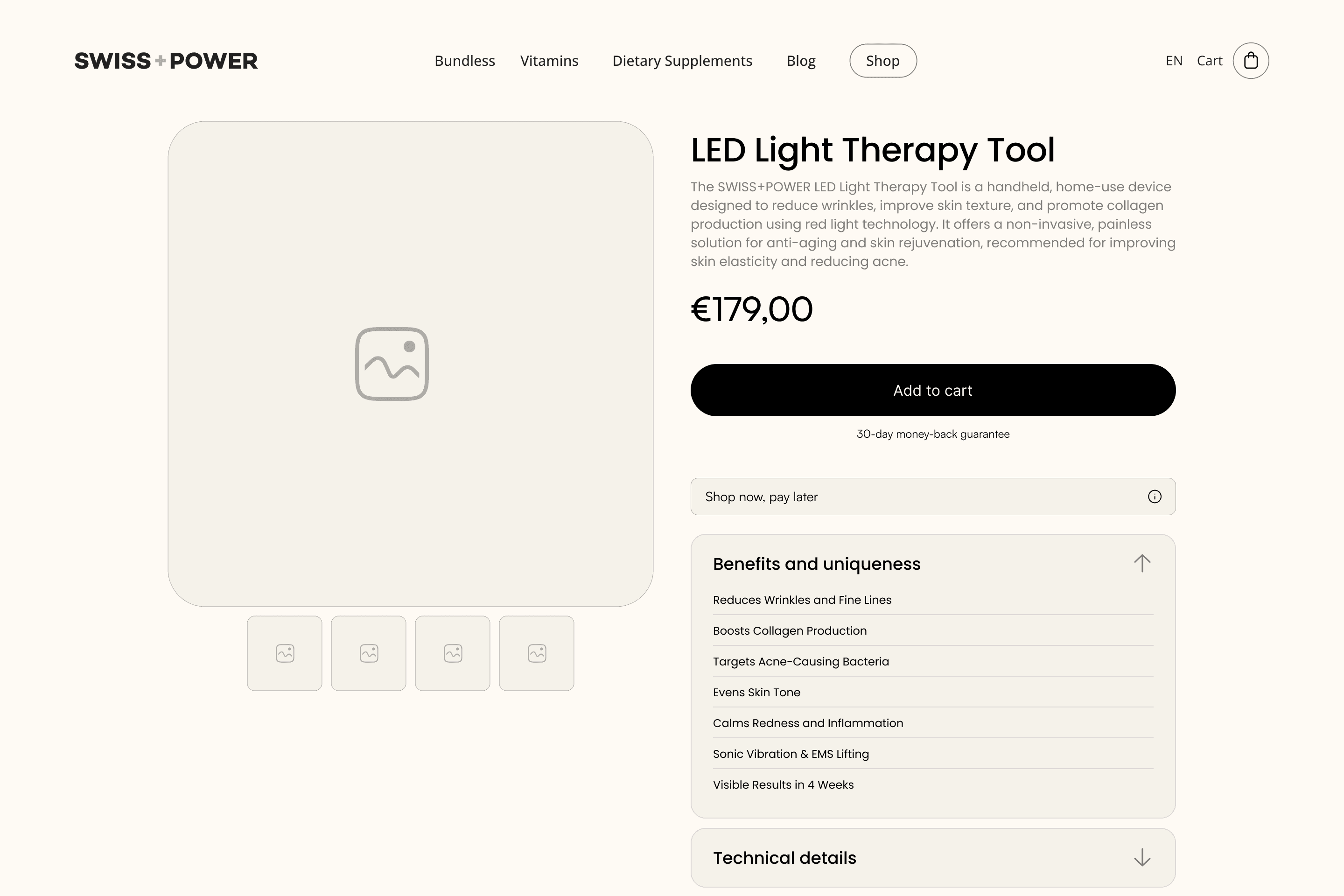
12 page templates redesigned
//
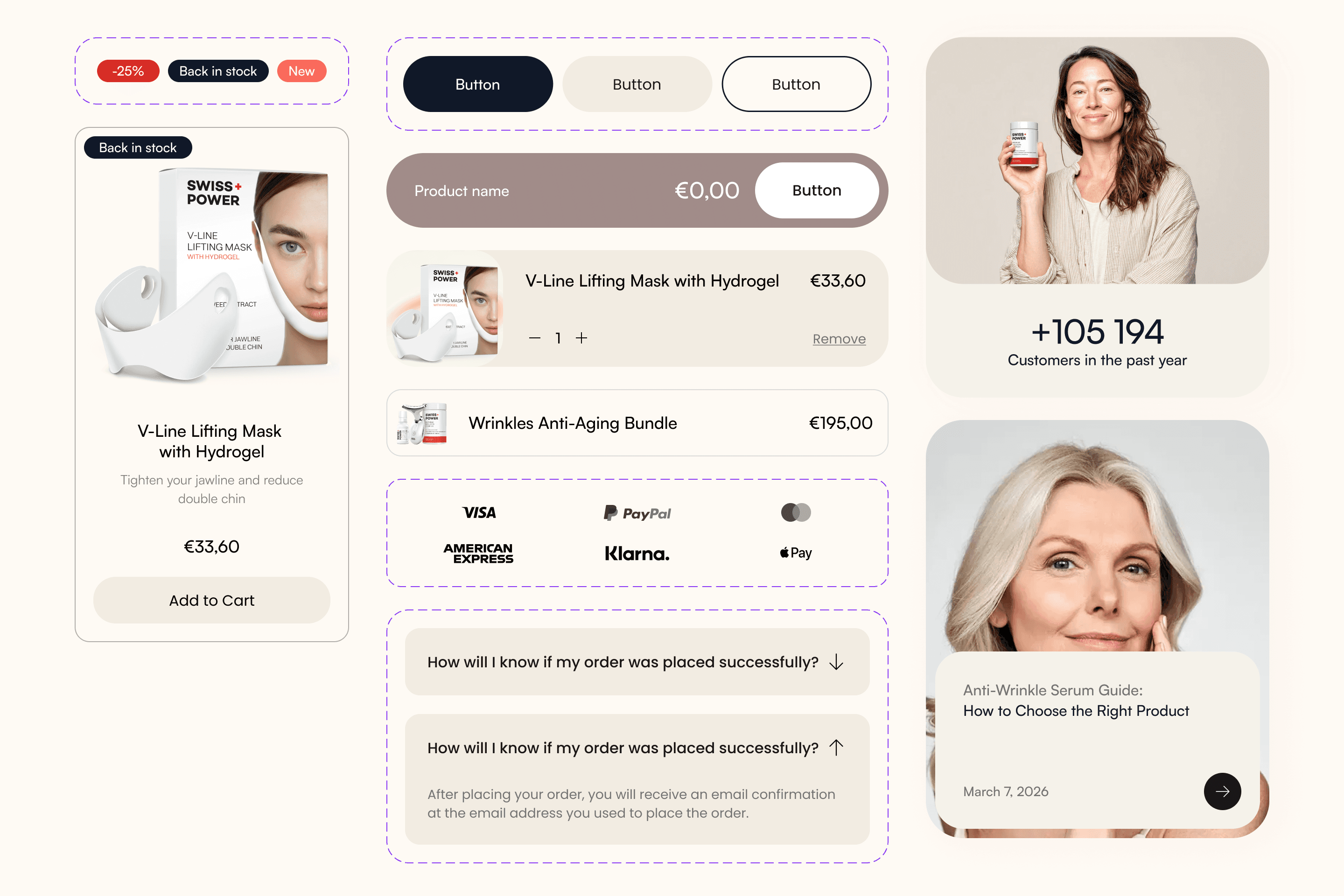
40+ component system
//
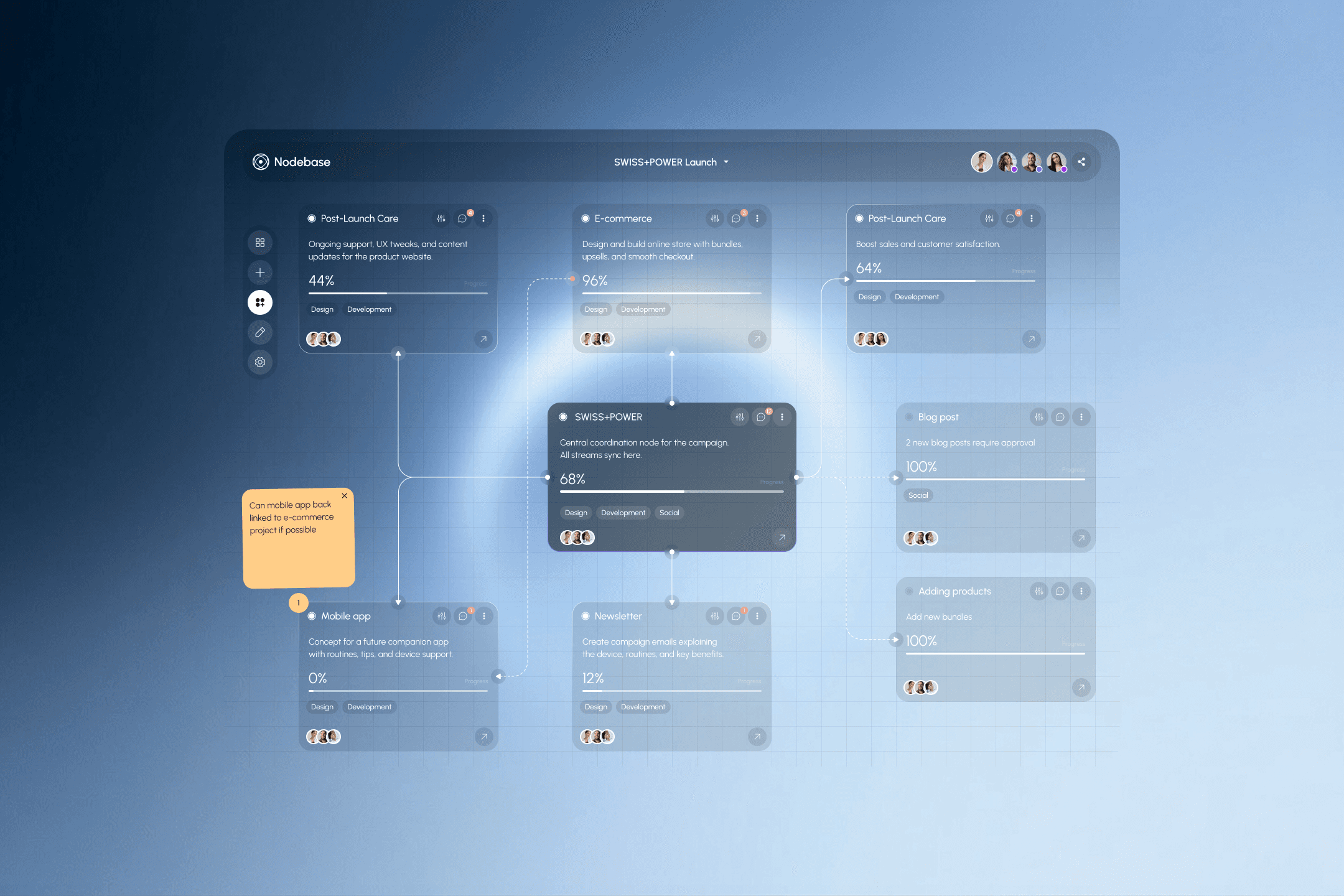
Admin panel build
//
Process
Process Seams — Where I Fixed the Flow
Challenges
Broken price–perception match
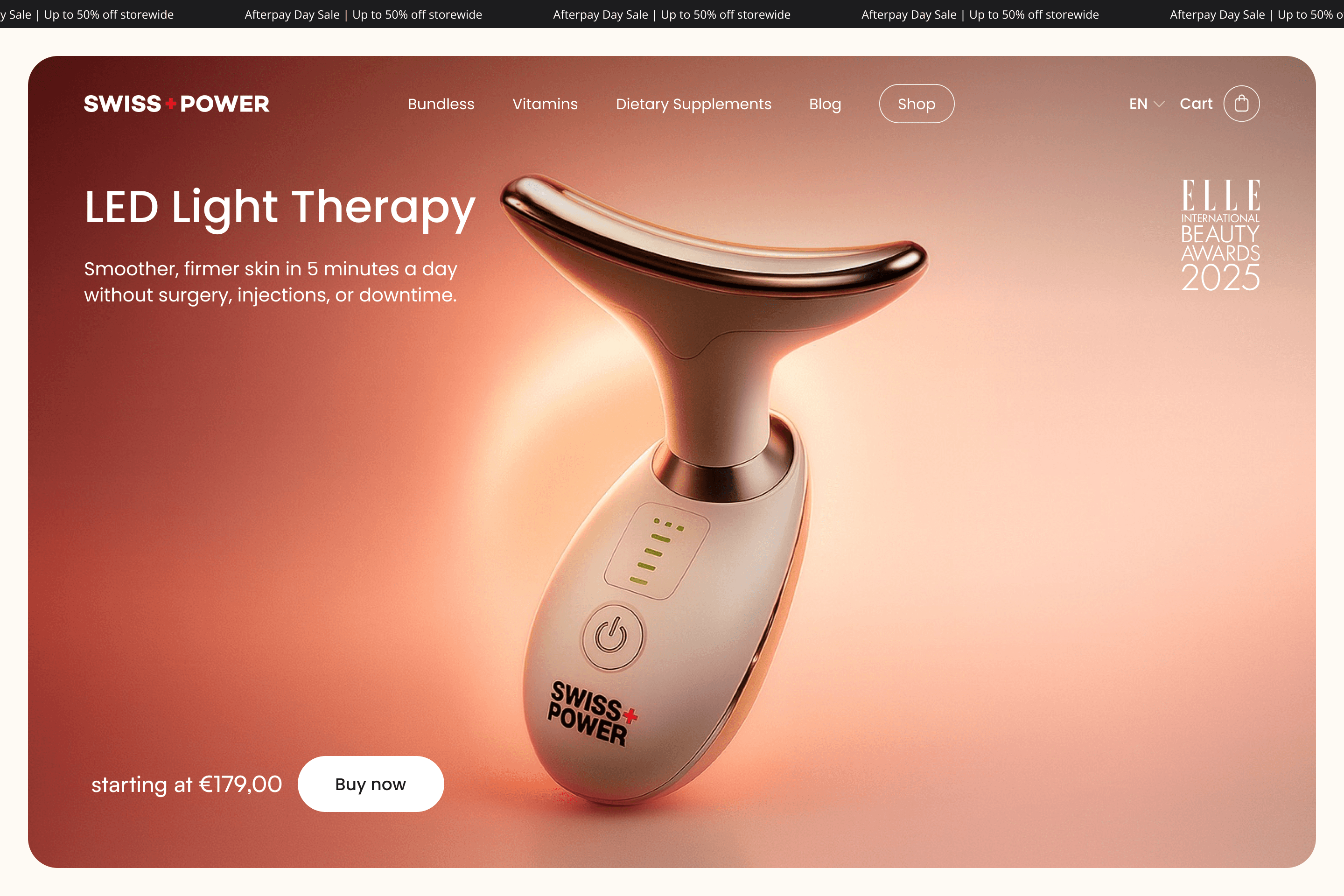
The product's clinical credibility existed — ELLE award, certifications, 5,000+ reviews — but none of it was visible where purchase decisions happen. Users had no signal that this was a €179 medical-grade device before they hit the price.
Insight: Visual language was the problem, not awareness. The same buyer who converts on a clinical brand page was bouncing from a generic one.
Action: Moved ELLE badge and price anchor into the first viewport. Shifted photography to product-centered, restrained clinical aesthetic throughout.
Template-driven IA blocked scalability
Default Shopify structure forced every new product launch to depend on a designer — content hierarchy was shallow and couldn't reflect how users actually make decisions (by concern, by routine, by product).
Insight: The issue wasn't the template itself — it was that no one had modeled the actual decision path before choosing a structure.
Action: Redesigned IA around three user intents with progressive disclosure for specs. Built a 40+ component system so non-designers can launch new products without breaking the visual language.