Introduction
Most project tools show you tasks.
Nodebase shows you how they connect.
Instead of scattered boards and disconnected documents, teams work inside one shared environment where planning and execution stay aligned. The design challenge: make invisible project structure visible without adding complexity.
Role
Product & UI/UX Designer
Company
Personal project
Year
2023–2024
Timeline
4 weeks
Categories
Project Management
B2B Tools
Challenges
No shared mental model of the project
Work lived in separate boards — every team had their own view, and nobody saw the whole picture. Priorities shifted silently, and realignment happened too late.
Insight: Teams didn't lack tools — they lacked a single structure that everyone could navigate from.
Action: Designed a shared canvas where every workstream becomes a card on one map, visible to all roles at once.
Dependencies surfaced too late
Design, development, and growth ran in parallel until conflicts appeared. By then, work had to be redone.
Insight: Dependencies were known — just never made explicit until they became blockers.
Action: Introduced directional flow links between cards, so it's clear which stream feeds another before work begins.
Two audiences, one tool — leads and contributors needed different views
Leads needed to see the full project map. Contributors needed a personal task queue. Most tools force a choice between the two.
Insight: The problem wasn't missing features — it was that the underlying data model didn't support both views from the same source.
Action: Built a dual-view system where the same card structure renders as a strategy map for leads and a focused queue for contributors — no switching, no duplication.
Canvas
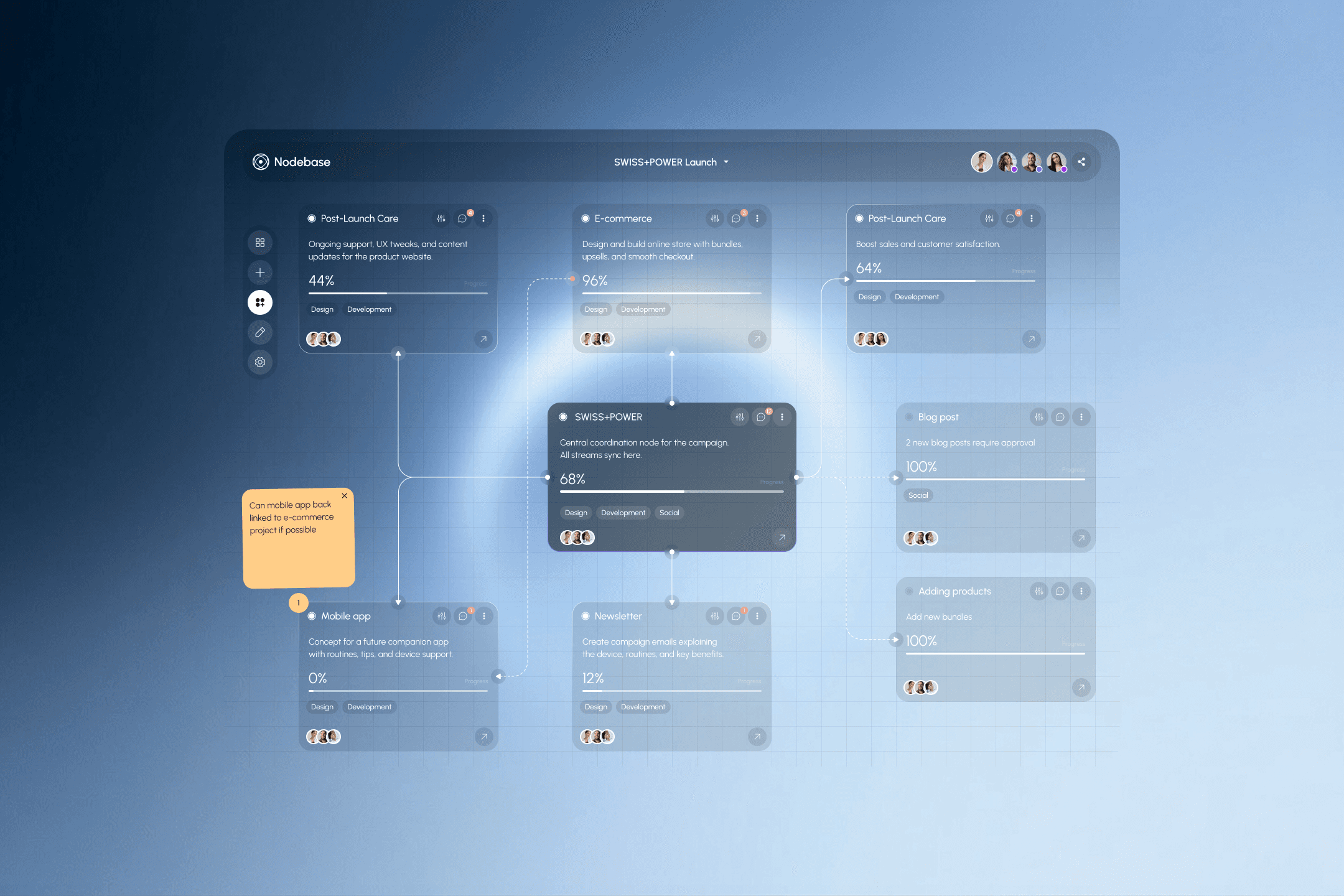
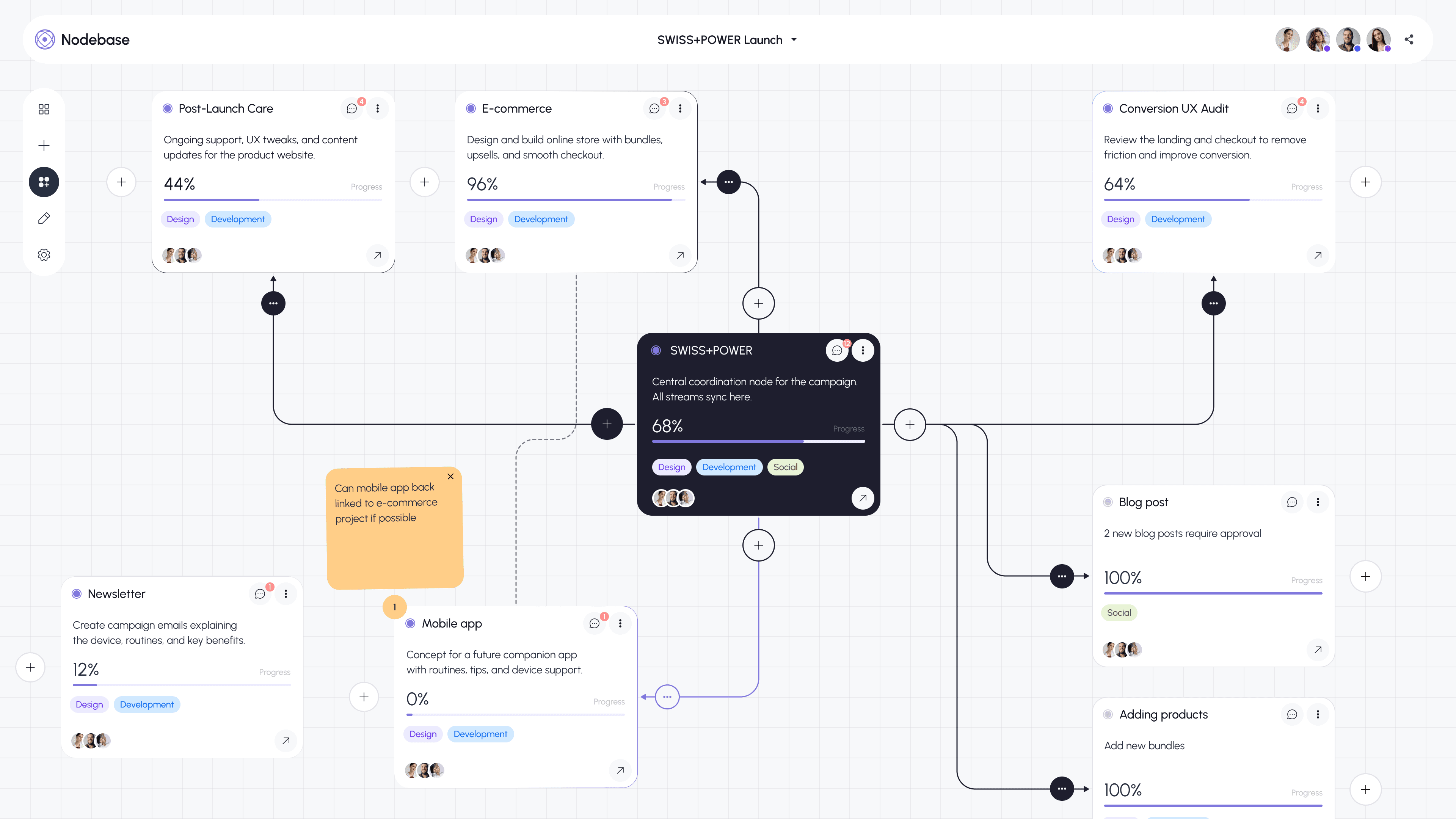
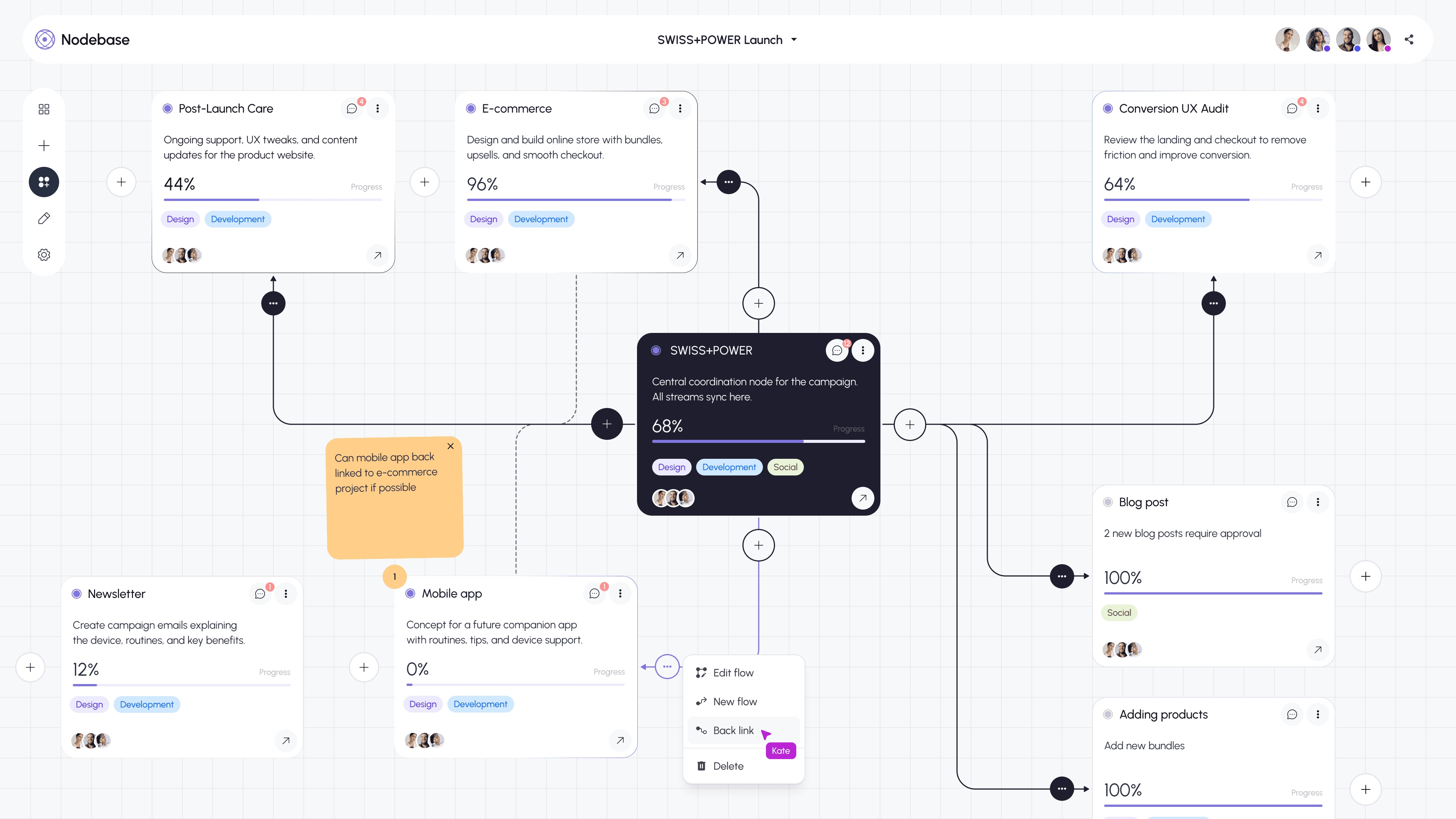
One canvas that mirrors the real project — streams, owners, and dependencies in a single navigable space.
Every meaningful unit of work becomes a card: named, tagged, owned, and connected. The canvas reflects how the project actually works, not how it was planned in a spreadsheet.
Creating a new flow
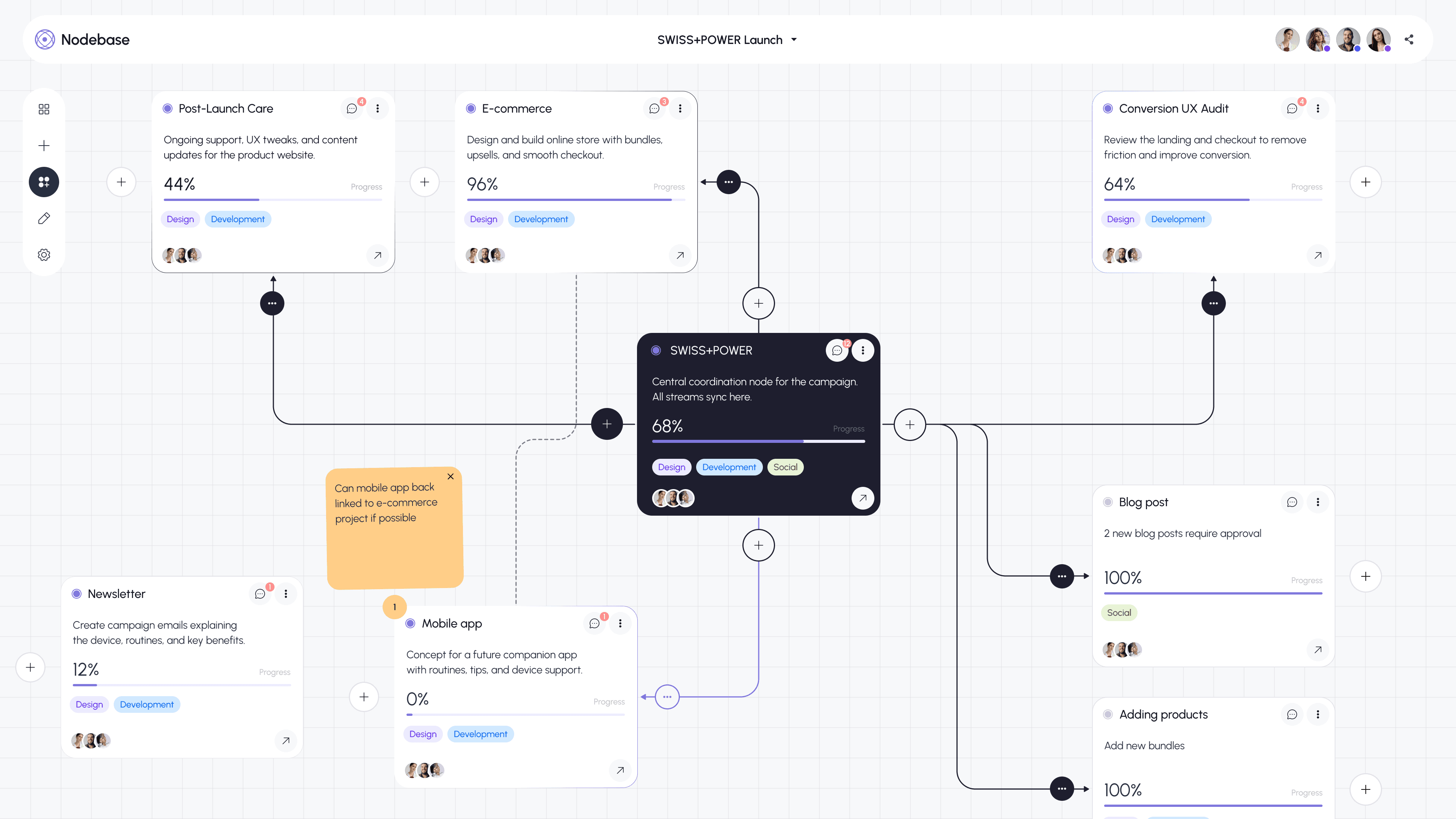
Scope defined before work starts —
not reconstructed after it's lost.
When a new workstream appears, the team creates a flow card: goal, structure, tags, owner — all in one place. Draft flows can be refined over time and connected to the main map without losing any decisions made along the way.
Linking topics
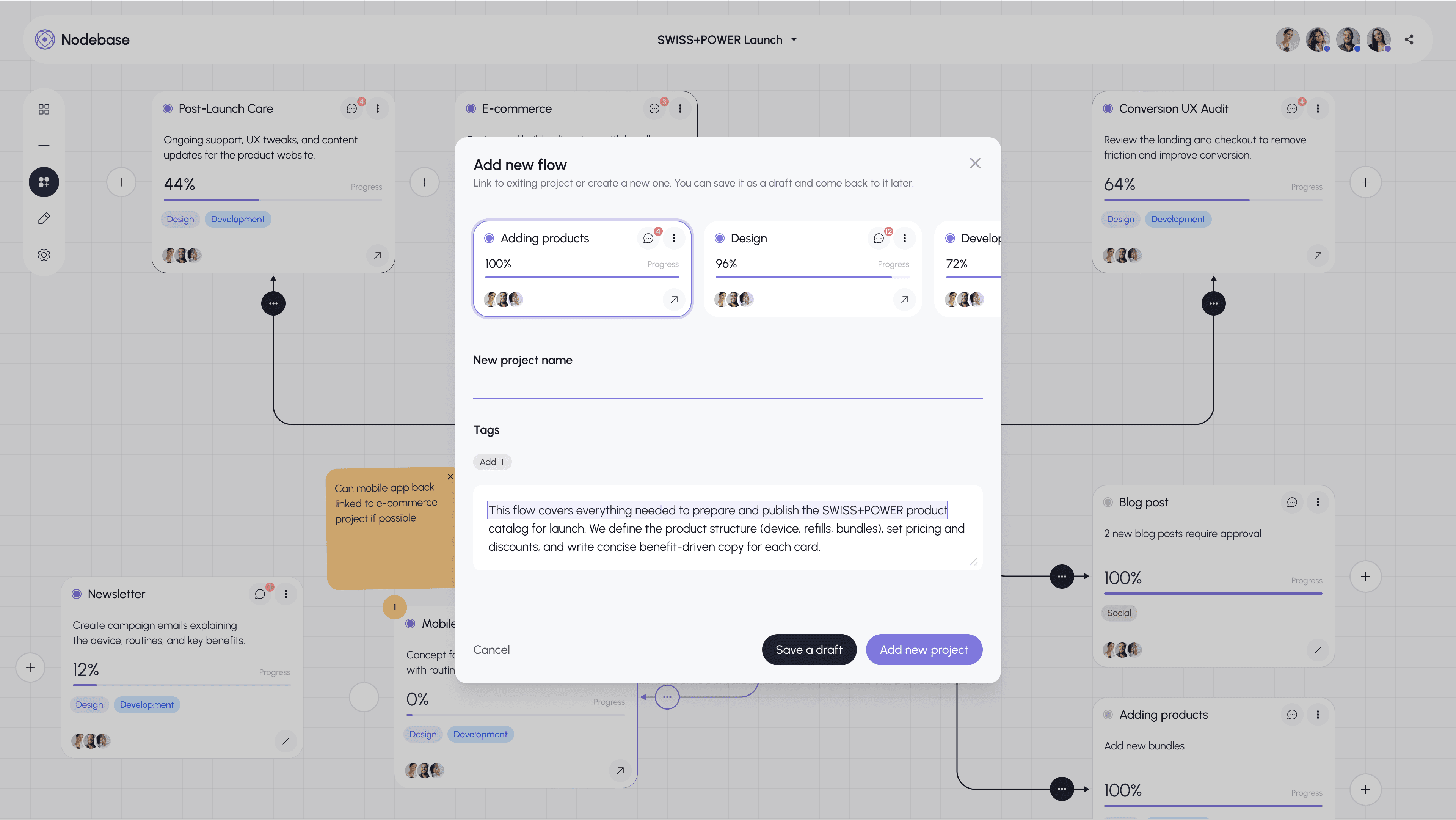
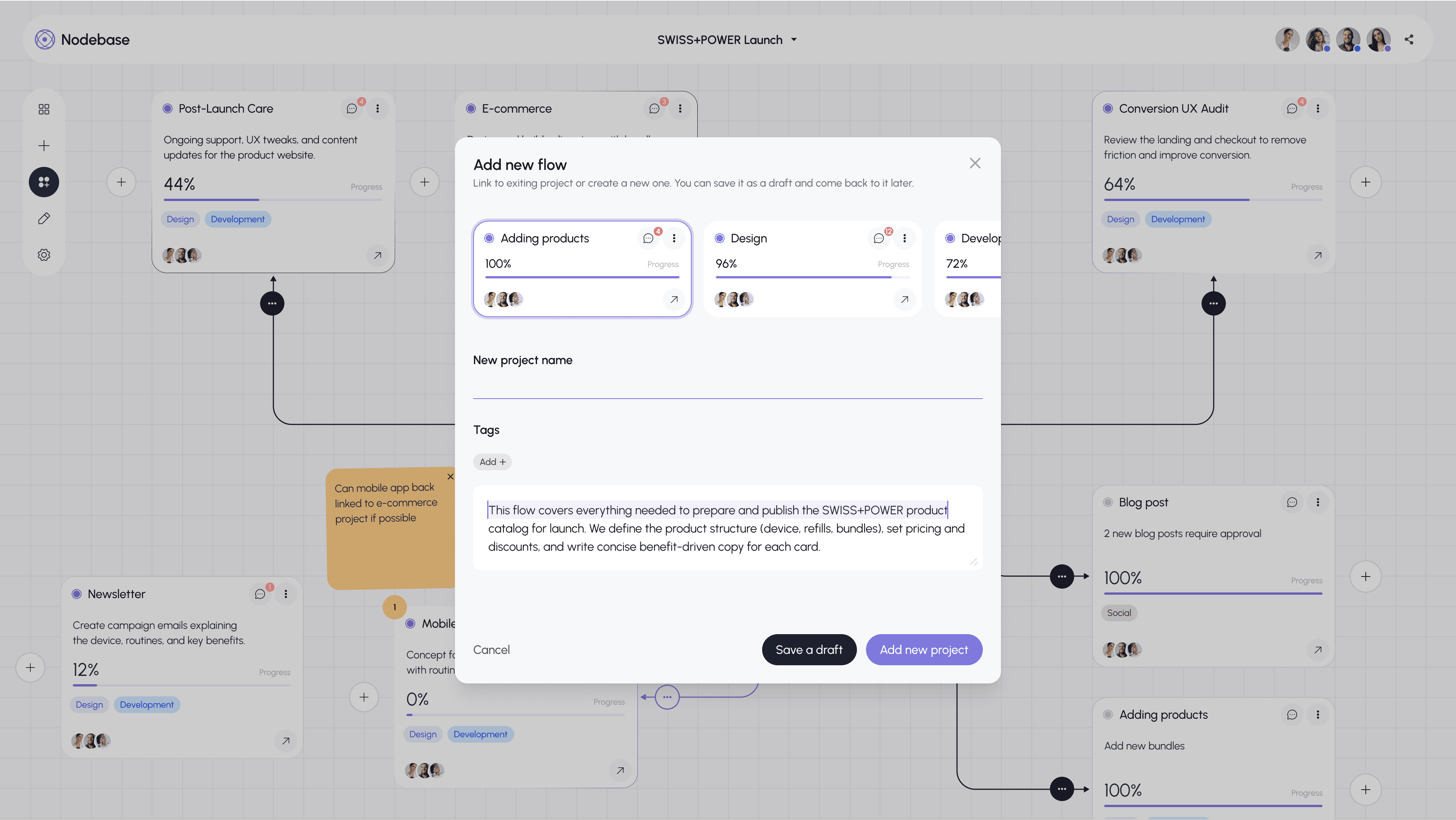
Backlinks over tags — because direction matters more than categorisation.
Tags create flat, non-directional associations. Backlinks make explicit which stream feeds another — so when one area changes, everyone downstream knows immediately. Navigation stays natural: flows always know which initiative they support, strategic cards always see all connected work.
Deep dive
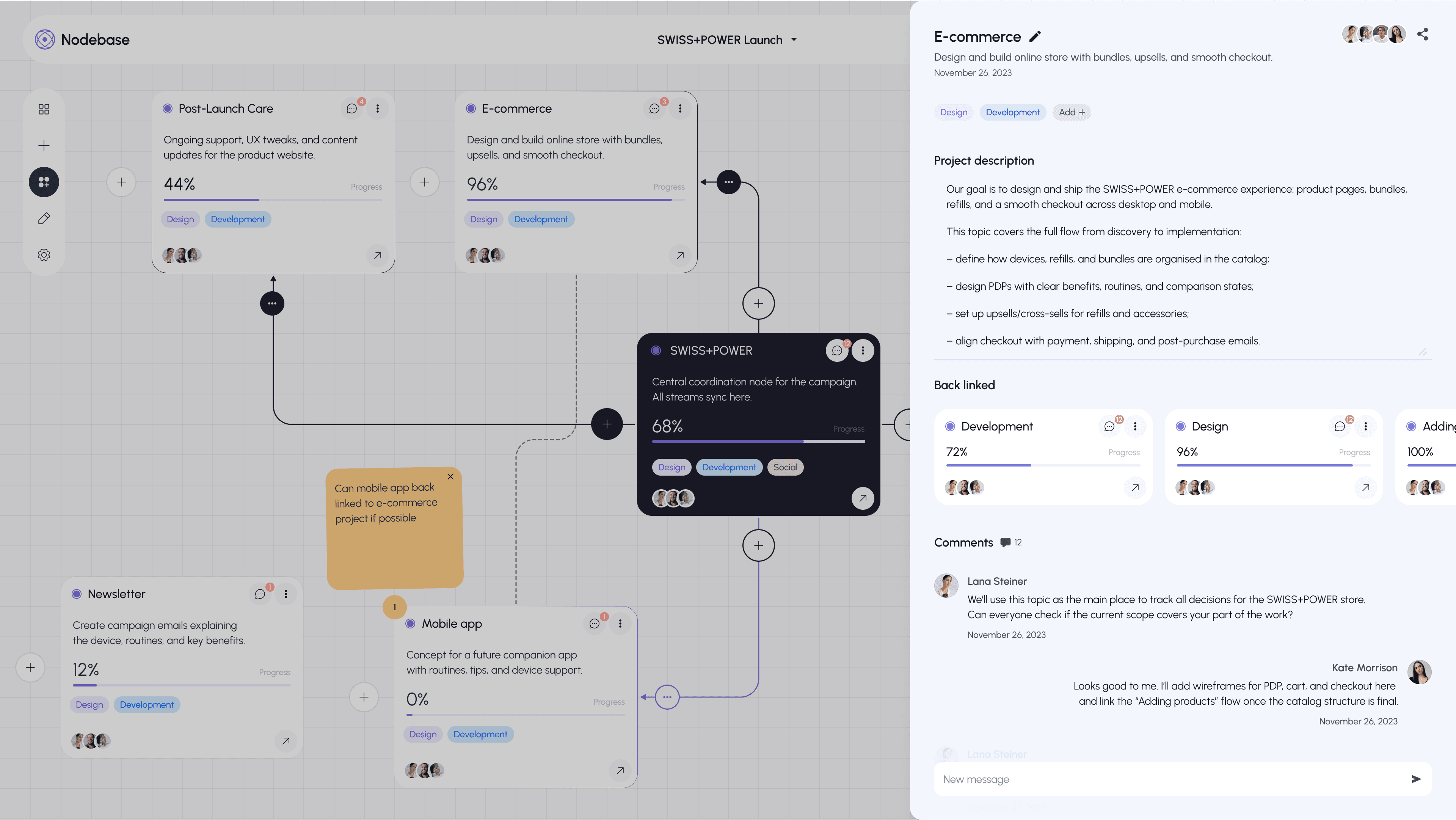
Side panel over modal — context should not interrupt spatial orientation.
Opening a card reveals everything about that stream: description, related flows via backlinks, files, and a threaded comment log. Decisions stay anchored to the exact part of the project they affect — not buried in a generic chat. The canvas stays visible while you work inside a card.
From strategy to focus
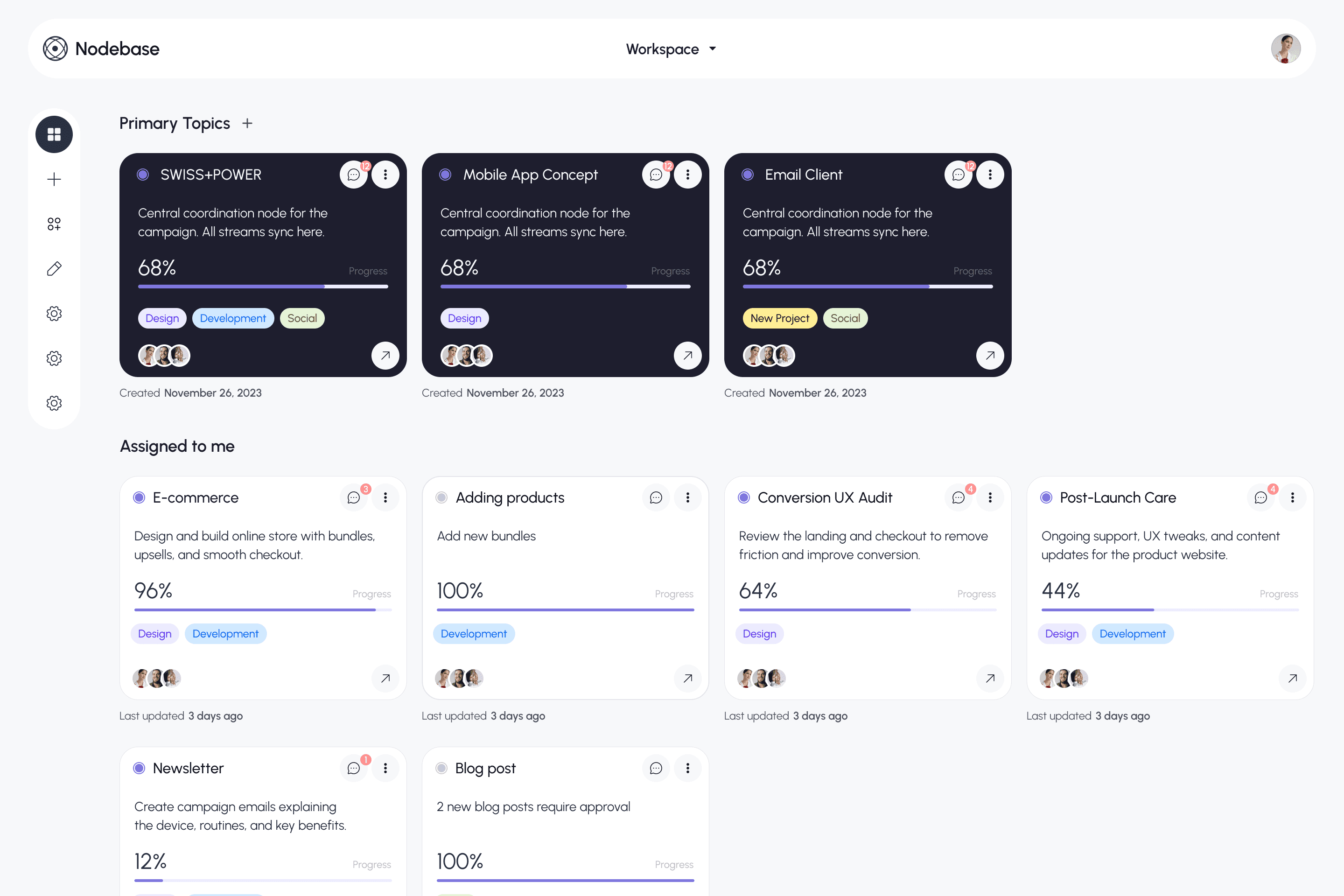
Primary topics for the org, a clear personal queue for every contributor — from the same data model.
The dashboard shows key project topics at the top and an "Assigned to me" section below. Leaders operate on the high-level map; contributors see only what's theirs. Both views are powered by the same underlying card structure — no duplication, no manual sync required.
Design system
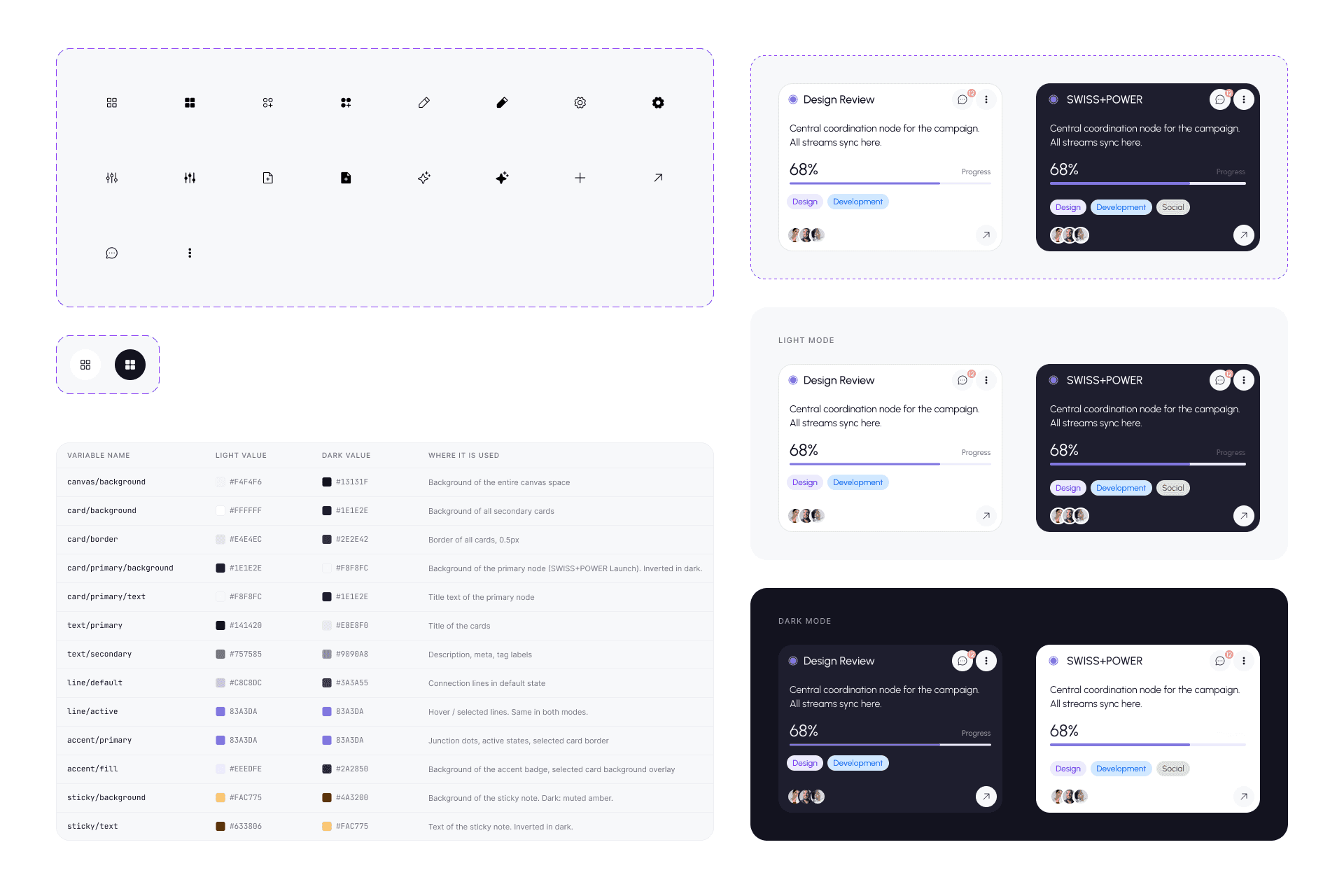
A modular system designed to stay legible as the canvas grows in complexity.
Cards, flow connectors, backlink indicators, and activity states share one visual language. Typography and colour were intentionally constrained — the system should recede when the project content is the focus, not compete with it.